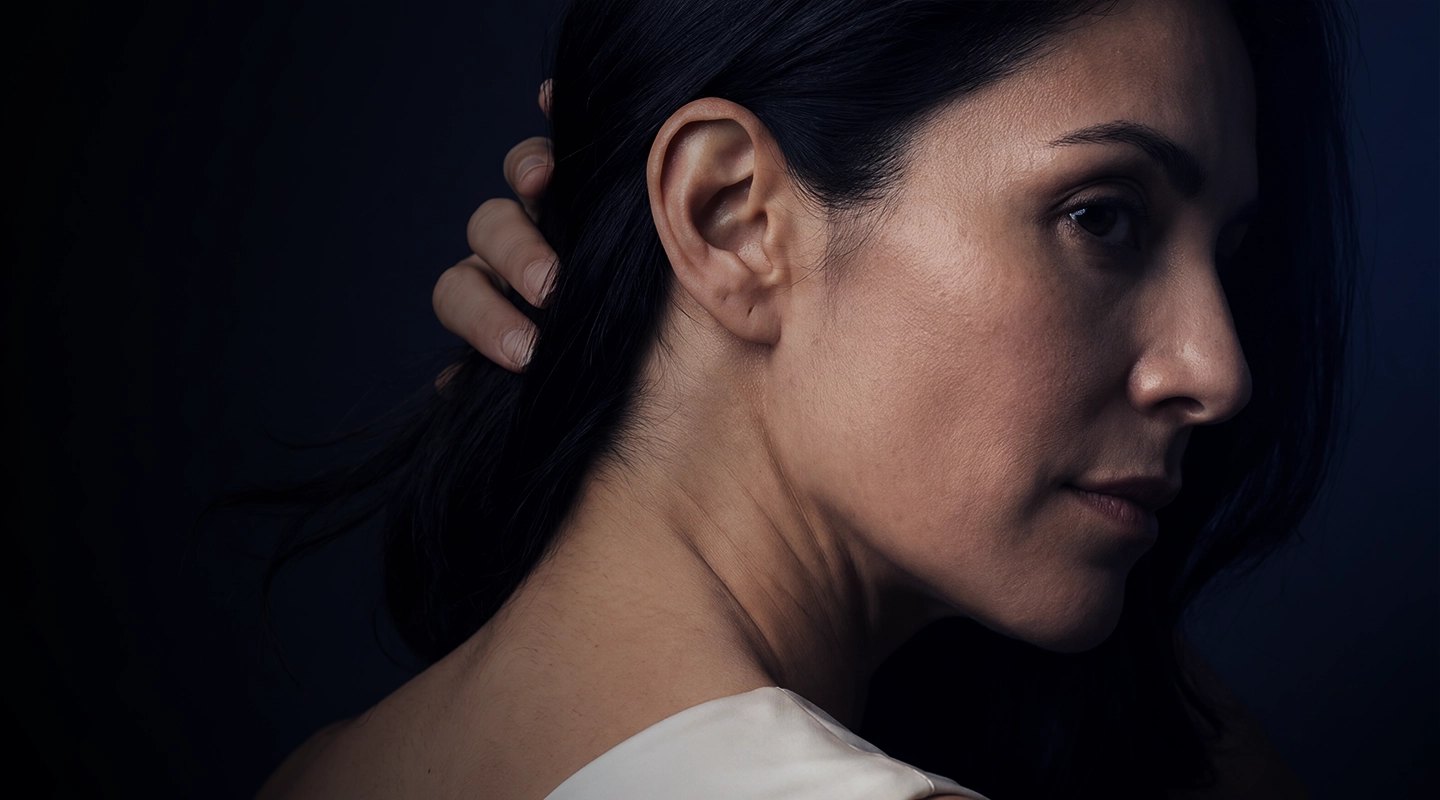
Otoplasty
Ear correction
Reshapes or repositions prominent ears so that they sit closer to the head. The incision is hidden behind the ear.
At a glance
- Incision
- Behind the ear
- Patients
- Adults aged 18 and over
- Aftercare
- Comprehensive aftercare
- Post-op garment
- Mainly at night, for four weeks
Medically reviewed by Dr Antonios Mitsakos, GMC 6148715.
What it is
Ear correction (otoplasty) changes the position, shape or size of the ears. Most often, it sets prominent ears closer to the head.
We offer it to adults only. Dr Antonios Mitsakos performs the operation at a carefully selected London hospital, and you can see him for your consultation at The Fitzrovia Hospital or at 64 Harley Street.
Is it right for you?
It may suit you if
- Your ears stand further from your head than you would like
- One ear looks noticeably different from the other
- You are 18 or over and in good general health
Dr Mitsakos may advise against it if
- Your concern is hearing or the inner ear, which is for an ear, nose and throat specialist
- A medical condition makes surgery unsafe for now
How it is done
Dr Mitsakos makes the incision in the fold behind the ear. He then reshapes the cartilage, or holds it in place with permanent stitches, so that the ear sits closer to the head.
Recovery
You wear a post-op garment mainly at night for four weeks to protect the ears while they heal.
Swelling and tenderness settle over the first few weeks.
You go home with a written recovery plan. Your first check after surgery is with our nursing team, and Dr Mitsakos then reviews your result as it settles.
Risks and safety
Every operation carries risk. The common risks are set out here, amongst others. Dr Mitsakos takes you through each of them at your consultation, and how he reduces them, and they are set out in writing before you decide.
Asymmetry
Ears are rarely an exact pair before surgery, and some difference remains afterwards. Occasionally it is enough to need further surgery.
Scarring
Every incision leaves a permanent scar. Here it sits in the fold behind the ear, and most scars fade over 12 to 18 months without disappearing.
Bleeding and infection
Both are uncommon. If either happens, it may need treatment or a return to theatre.
Further surgery
A small number of people need a second operation to adjust the result.
Return of prominence
The ear can move partly back towards its original position. Occasionally this needs a further operation.
Stitch problems
A permanent stitch can occasionally work its way through the skin or become infected, and then needs removing.
Over-correction
The ear can end up closer to the head than planned, and occasionally needs adjusting.
Fees
From £7,000
Your fee is fixed in writing after your first consultation, once Dr Mitsakos knows exactly what the operation involves.
Related procedures
Eyelid surgery
Removes loose skin from the upper or lower eyelids and treats fat that bulges forward, where these make the eyes look tired or heavy.
Read moreUpper lip lift
Shortens the space between the nose and the upper lip, so that more of the lip shows, without adding volume.
Read moreChin liposuction
Removes the small pocket of fat beneath the chin, under local anaesthetic, to define the line between the jaw and the neck.
Read more